A year of AI coding / 03
What faster coding changes about engineering
Shorter generation times are useful when they improve experiments and decisions, not just the volume of code waiting for review.
By Grafty team · · 3 min read
Written in .
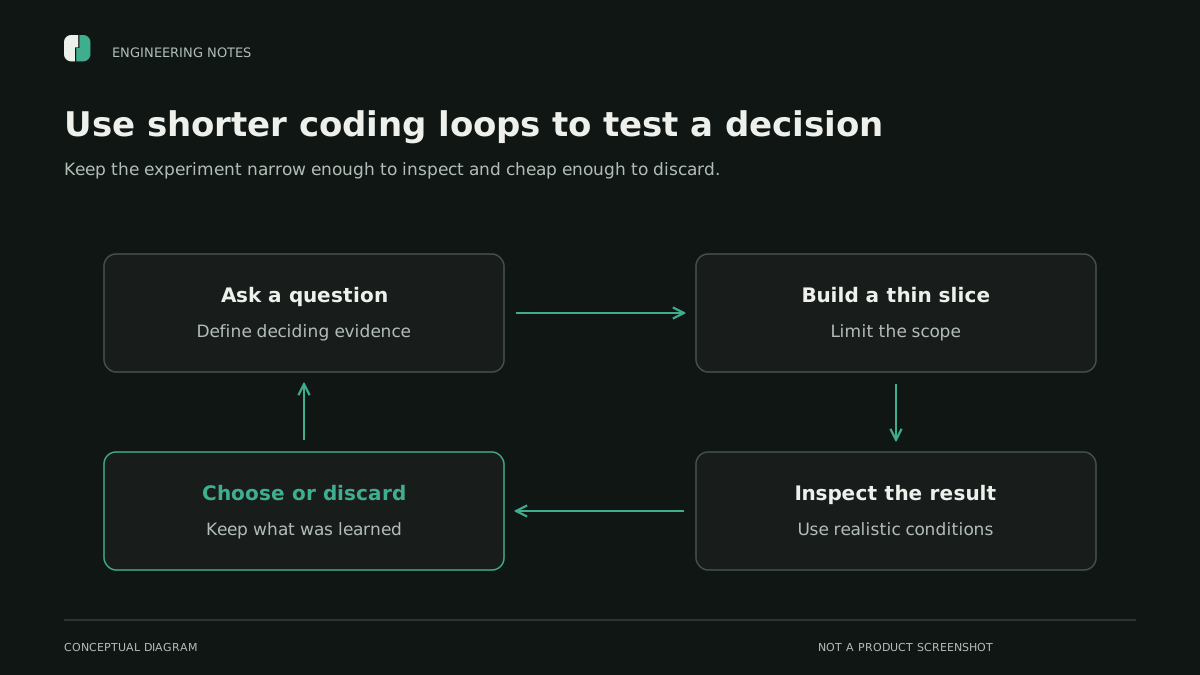
A slow development loop encourages people to batch decisions. If trying an alternative takes most of an afternoon, you spend more time arguing about whether the alternative is worth trying. Shorten that loop and the conversation changes. You can build the small experiment and inspect it.
That is the part of faster AI coding we find most interesting. The value is not limited to getting the same implementation sooner. It can change which questions a team is willing to investigate.
Cursor 2.0, released on October 29, 2025, combined its Composer coding model with a revised agent interface, parallel execution, and an integrated browser. Its release notes described isolated workspaces for concurrent agents. The original release notes document those changes. They do not establish a universal productivity improvement for every project, and we would not use them that way.
 Open full-size diagram
 Make experiments smaller
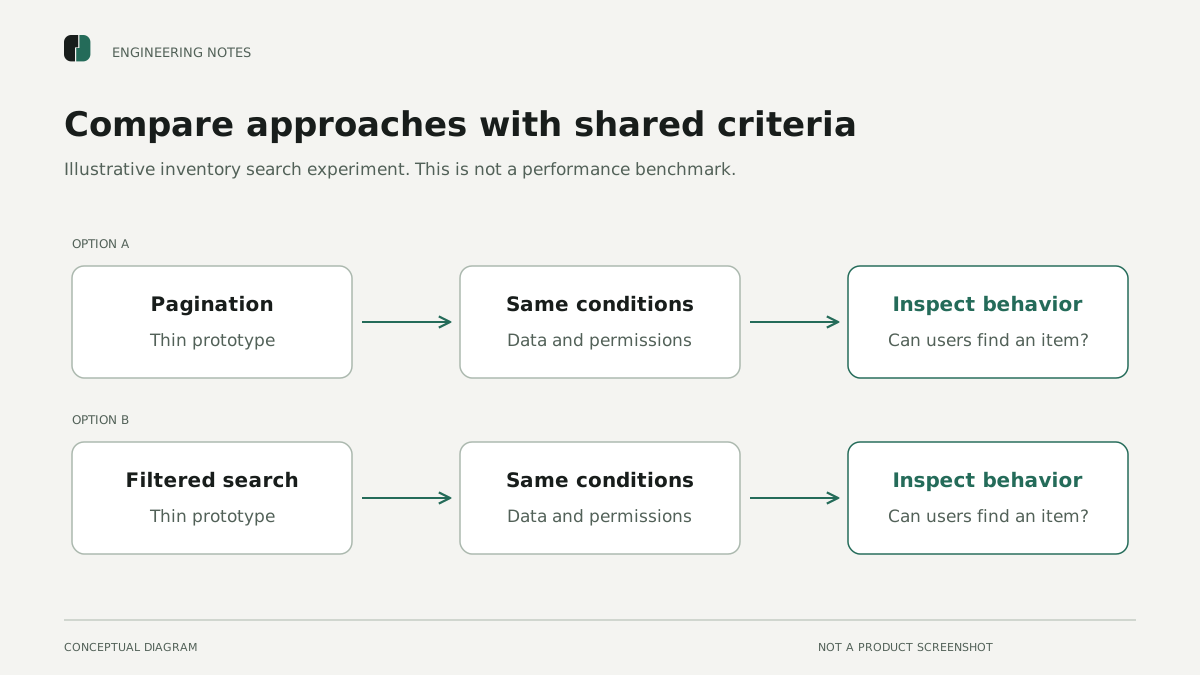
Imagine a team building an internal inventory screen. There are two reasonable ways to handle a large result set: server-side pagination or a filtered search that requires a narrower query before returning results.
An agent can help produce a thin implementation of each. The useful experiment is whether an operator can find an item with realistic data volumes and the expected permissions. Building two polished screens with mock data answers a much easier question.
We would define the deciding evidence before generating either version. For this example, that might include query behavior against a representative dataset, the number of steps an operator takes, and whether the interface makes an incomplete result set obvious. Then keep the prototypes narrow enough to discard.
Discarding work is important here. A fast prototype can acquire the appearance of a finished application before anybody has checked the data model or failure paths. Once people see a working screen, there is pressure to ship it. The team needs a way to say that the experiment succeeded while the implementation is still unsuitable for production.
 Open full-size diagram
 Watch the queues after generation
Generation speed only helps delivery if the following stages can absorb the output. If every experiment creates a large pull request for the same reviewer, the bottleneck has moved rather than disappeared.
That suggests a different way to evaluate a faster tool. Measure how long it takes to reach a useful decision, how much of the generated work survives review, and whether the team spends less time correcting misunderstandings. Keep the workload comparable. A tool that feels fast on a new component may behave differently during a migration through an established codebase.
There is a tradeoff between fast interaction and deeper analysis, too. A quick response is convenient for a local UI edit. A change to authorization may justify more time inspecting the relevant paths. We would not force both tasks through the same latency target.
Parallel alternatives also need an explicit stopping rule. Once one approach meets the criteria and the others offer no clear advantage, stop generating variants. A longer menu of options is not inherently a better engineering outcome.
Faster coding should buy room for better questions. Can we test the awkward edge case? Can we compare the migration strategies on a representative service? Can we show the operator a rough version before committing to the workflow?
Those are useful gains. Filling the review queue with code that nobody needed is not.